
Times Higher Education World University Rankings 2027: UK universities remain strong as Asia gains ground
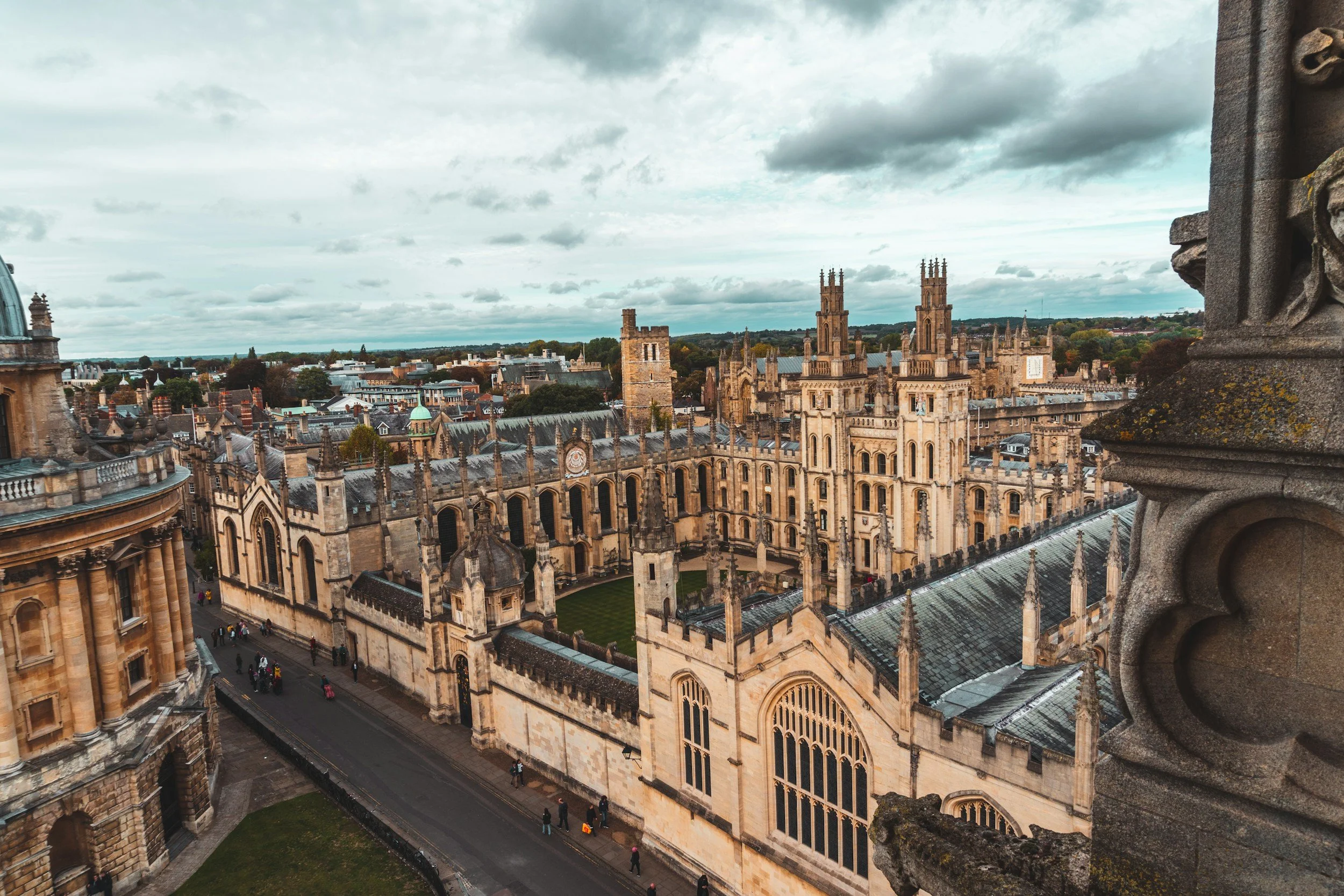
The UK's leading universities remain among the world's best, but the latest Times Higher Education World University Rankings 2027 also provide a warning about the changing global higher education landscape.
The University of Oxford has retained the number one position in the world for an 11th consecutive year, while Cambridge, Imperial College London and the University of Edinburgh all feature in the global top 30.
But behind those headline results, the picture is more complicated.
The UK now has 25 universities in the global top 200, one fewer than last year. At the same time, THE says that Asian universities have overtaken continental Europe for the first time, with China and Singapore continuing to make gains.
For international students considering the UK, the rankings therefore offer both reassurance about the strength of British universities and an indication of how quickly the global higher education market is changing.
Top UK universities in the Times Higher Education World Rankings
The biggest UK headline is familiar.
Oxford remains number one in the world
The University of Oxford has retained first place in the THE World University Rankings for the 11th consecutive year.
Its overall score of 97.9 puts it just 0.1 points ahead of MIT in second place.
| Rank | University | Country | Overall score |
|---|---|---|---|
| 1 | University of Oxford | United Kingdom | 97.9 |
| 2 | Massachusetts Institute of Technology | United States | 97.8 |
| =3 | Princeton University | United States | 97.0 |
| =3 | Stanford University | United States | 97.0 |
| 5 | University of Cambridge | United Kingdom | 96.9 |
| 6 | Harvard University | United States | 96.7 |
| 7 | California Institute of Technology | United States | 96.5 |
| 8 | Imperial College London | United Kingdom | 95.2 |
| =9 | University of California, Berkeley | United States | 94.3 |
| =9 | Yale University | United States | 94.3 |
Oxford's position is particularly notable given how close the competition has become. THE says MIT actually performs better on several individual measures, including student-staff ratio, citation impact and research strength, but Oxford's overall performance keeps it at the top.
The supplied ranking data also shows Oxford scoring 100 for teaching and 99.9 for research environment.
Four UK universities make the global top 30
The UK has four universities in the top 30:
University of Oxford
University of Cambridge
Imperial College London
University of Edinburgh
That is an impressive concentration of globally recognised universities.
Cambridge is fifth, although it has fallen from joint third in the previous edition. Imperial retains eighth place. Edinburgh is joint 29th.
The THE gives Edinburgh an overall score of 83.5, with particularly strong scores for research quality and international outlook.
UCL climbs back into the global top 20
Another significant UK result is UCL.
It is joint 17th in the world, returning to the top 20 for the first time since the 2022 edition.
UCL's research quality score is particularly strong at 97.7, while its international outlook score is 96.8.
This is a useful result for international students because UCL's position illustrates how differently universities can perform across different ranking systems.
In the recent UK domestic rankings we've covered on Scholarship Scanner, UCL has occupied a much lower position.
That isn't necessarily a contradiction.
The different rankings are measuring different things.
LSE's return to the global top 50 is another major result
The London School of Economics and Political Science has also made an important move.
THE reports that LSE has reversed a five-year decline and returned to the global top 50, reaching 47th in the 2027 rankings.
This is particularly interesting when compared with the domestic rankings we have covered recently.
LSE performed extremely strongly in the UK-focused tables, where it appeared near the very top of the rankings.
THE's global ranking provides a different perspective because its methodology places much greater emphasis on research and global performance.
How does THE compare with the UK's domestic rankings?
This is perhaps the most interesting part of the story for UK students and international applicants.
Over the last few weeks, Scholarship Scanner has covered the three major domestic university league tables:
THE adds a completely different perspective because it is a global ranking of research-intensive universities.
That means the positions can look very different.
Asia is now a major challenger
The biggest change in the wider global picture is arguably not in the UK at all.
THE says Asia has overtaken continental Europe for the first time.
China's Tsinghua University has climbed to 11th, overtaking ETH Zurich, while Peking University is 13th.
Singapore's National University of Singapore has risen two places to 15th.
That means three Asian universities are now in the global top 15 for the first time.
Nanyang Technological University is also in the top 30, at 28th.
For the UK, this matters.
The country continues to have an extraordinarily strong group of globally recognised universities, but it is competing in an increasingly crowded international market.
The UK has 25 universities in the global top 200
The broader UK picture is less positive than the results at the very top suggest.
THE reports that 25 UK universities appear in the global top 200, compared with 26 last year.
Of those:
12 improved
3 remained in the same position
10 fell
That means almost two-fifths of the UK's top-200 universities declined in the rankings.
This creates an interesting contrast.
At the very top, Oxford, Cambridge and Imperial remain among the world's elite.
Further down the table, however, UK universities are facing increasing competition.
Why is the UK under pressure?
THE's analysis points towards the financial challenges facing British higher education.
It reports that UK universities have experienced relative declines in institutional income, research income and industry income, alongside declines in research strength and productivity.
That is significant because the rankings are increasingly showing a divide between the UK's enduring global reputation and the underlying performance measures.
THE quotes higher education academics warning that sustained research performance depends heavily on funding, particularly public funding.
This does not mean that UK universities are suddenly becoming poor performers.
Far from it.
Rather, the 2027 rankings suggest that the UK remains extremely strong while other countries are improving at a faster rate.
That distinction is important.
What does this mean for international students?
For international students, the message is mixed but important.
The UK's leading universities continue to offer globally recognised qualifications.
Oxford is number one in the world.
Cambridge is fifth.
Imperial is eighth.
UCL is joint 17th.
Edinburgh is joint 29th.
LSE is 47th.
For students who want a globally recognised UK degree, there remains a huge amount of choice.
But rankings should not be the only consideration.
International students also need to look at:
Tuition fees
Scholarships and funding
Living costs
Course and subject rankings
Graduate employment prospects
Location
Visa requirements
Post-study work opportunities
This is particularly important because a university's overall global ranking tells you very little about the cost of studying there.
A highly ranked university may also be significantly more expensive than another university offering a similarly strong course.
Scholarships can make a difference
For international students, one of the biggest questions is often not simply:
"Which university is ranked highest?"
but:
"Which university gives me the best opportunity to study in the UK within my budget?"
That is where scholarships become particularly important.
Many UK universities offer scholarships specifically for international students, ranging from relatively small tuition-fee discounts to substantial awards covering a large proportion of tuition fees.
The availability of funding can therefore change the financial calculation for an international student.
At Scholarship Scanner, we track UK university-funded scholarships for international students, helping students identify funding opportunities alongside information about universities, rankings and the cost of studying in Britain.
Scholarship Scanner's take
The 2027 Times Higher Education rankings tell two stories about UK higher education.
The first is extremely positive.
Oxford remains number one in the world, while the UK has four universities in the global top 30 and 25 in the top 200.
The second is more challenging.
The UK is facing increasing competition from rapidly improving Asian universities, while THE identifies declining relative performance in several of the financial and research measures underpinning university performance.
That makes the comparison with the domestic rankings we've covered recently particularly interesting.
The Guardian, Complete University Guide and Times and Sunday Times rankings can tell international students something about the UK student experience and graduate outcomes.
THE provides a much more global, research-focused perspective.
Taken together, they give students a broader picture of the universities they are considering.
And for international students, there is one more piece of the puzzle:
how much will it actually cost?
A university's global ranking might tell you about its international reputation, but scholarships can make the difference between an attractive option and an unaffordable one.
Find UK university scholarships for international students with Scholarship Scanner.