
Sunday Times Good University Guide 2027: St Andrews takes top spot as Imperial climbs to third
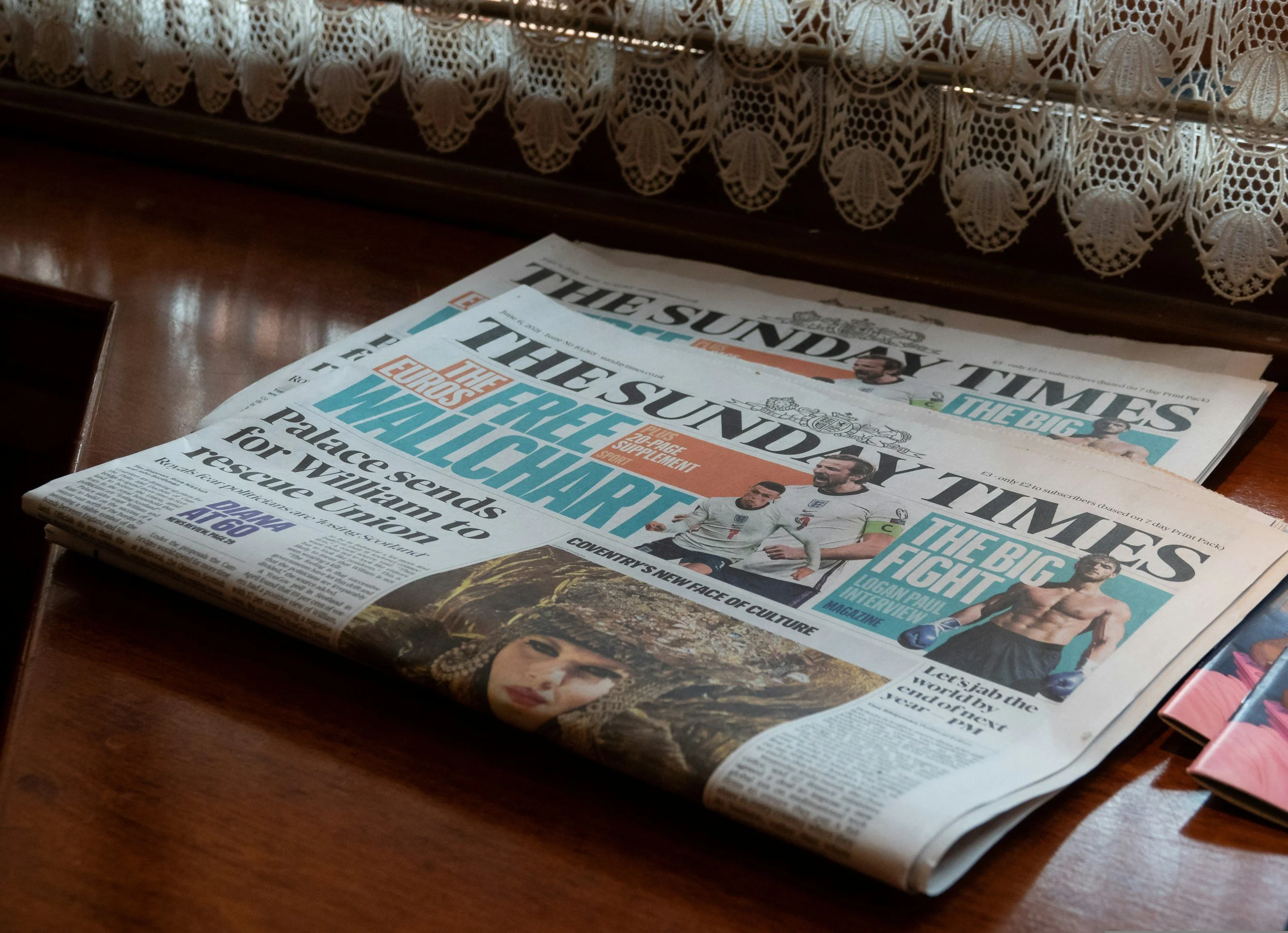
The Sunday Times Good University Guide 2027 has been released, completing the main round of UK domestic university league tables for the new academic year.
The rankings follow the Complete University Guide 2027, published in June, and the Guardian University Guide 2027, released last week. With all three major domestic tables now available, students have a clearer picture of how UK universities compare ahead of 2027 entry.
And while the three tables produce some noticeable differences, there is also a striking amount of consistency.
Eight universities appear in the top 10 of all three rankings, while the same six universities make up the top six in every table.
That suggests that, despite their different methodologies, the major domestic rankings broadly agree on which universities form the UK's leading group.
For students considering UK universities, including international students looking at tuition fees, scholarships and graduate prospects, the Sunday Times table provides another useful point of comparison.
What is the Sunday Times Good University Guide?
The Good University Guide is published by The Times and The Sunday Times and ranks universities using a range of measures covering areas including teaching quality, student experience, research quality, entry standards, graduate prospects, degree outcomes and continuation rates. The methodology also uses data from sources including HESA, the National Student Survey and the Research Excellence Framework.
The 2027 table therefore looks at several different aspects of university performance rather than simply measuring academic research.
However, tuition fees and scholarships are not among the headline measures used to calculate the overall ranking. For international students in particular, that means the league table should be considered alongside the cost of studying and the financial support available.
Top 10 UK universities in the Sunday Times Good University Guide 2027
| 2027 rank | 2026 rank | University | Change |
|---|---|---|---|
| 1 | 2 | St Andrews | ↑ 1 |
| 2 | 1 | London School of Economics | ↓ 1 |
| 3 | 6 | Imperial College London | ↑ 3 |
| 4 | 4= | Cambridge | — |
| 5 | 4= | Oxford | ↓ 1 |
| 6 | 3 | Durham | ↓ 3 |
| 7 | 8 | Warwick | ↑ 1 |
| 8 | 7 | Bath | ↓ 1 |
| 9 | 11 | Strathclyde | ↑ 2 |
| 10 | 10 | Bristol | — |
Imperial is the biggest climber
The most significant movement near the top of the Sunday Times table comes from Imperial College London, which climbs from sixth to third.
Imperial records a research quality score of 74% in the supplied data, the highest among the top 10, while its graduate prospects score of 93% is also the highest.
The university has also been named University of the Year 2027 by The Times and The Sunday Times.
Its rise is particularly notable because Imperial moves above both Oxford and Cambridge in this year's table.
That does not mean Imperial has suddenly become "better" than Oxford or Cambridge. Rather, it reflects how each university performs against the particular measures and weightings used by the Sunday Times.
St Andrews returns to number one
The University of St Andrews rises from second to first.
Its supplied scores include 91% for teaching quality and 90% for student experience, both the highest figures among the Sunday Times top 10.
St Andrews also records a 97% continuation rate.
The university's position is particularly interesting when the three major rankings are compared. It is consistently near the top of all three, although each table places it differently.
Oxford and Cambridge remain near the top
Cambridge remains fourth, while Oxford falls from joint fourth to fifth.
The two universities therefore sit outside the top three in the Sunday Times table for 2027.
However, looking at just one ranking can give a misleading impression of their position.
Both Oxford and Cambridge are in the top two of the Complete University Guide 2027, while Oxford is first and Cambridge second in the Guardian's 2027 table.
This is one of the clearest examples of why students should look at more than one domestic ranking.
How do the three major UK rankings compare?
Here is where the new Sunday Times table gets particularly interesting.
Top 10 compared
| University | Sunday Times 2027 | Guardian 2027 | CUG 2027 |
|---|---|---|---|
| St Andrews | 1 | 4 | 4 |
| LSE | 2 | 3 | 3 |
| Imperial | 3 | 5 | 5 |
| Cambridge | 4 | 2 | 1 |
| Oxford | 5 | 1 | 2 |
| Durham | 6 | 6 | 6 |
| Warwick | 7 | 7 | 7 |
| Bath | 8 | 8 | 9 |
| Strathclyde | 9 | 17 | Outside top 10 |
| Bristol | 10 | 13 | 17 |
| Loughborough | Outside top 10 | 9 | 8 |
| UCL | Outside top 10 | 10 | 13 |
| Lancaster | Outside top 10 | 12 | 10 |
The table reveals some interesting patterns.
Eight universities appear in all three top 10s
The following universities appear in the top 10 of all three major domestic rankings:
St Andrews
LSE
Imperial
Cambridge
Oxford
Durham
Warwick
Bath
This is perhaps the most important finding from comparing the tables.
Although the rankings disagree about the precise order, there is considerable agreement about the universities occupying the highest positions.
The same six universities make up the top six
There is an even stronger pattern.
The Sunday Times, Guardian and CUG all have the same six universities somewhere in their top six:
St Andrews
LSE
Imperial
Cambridge
Oxford
Durham
The order changes considerably.
For example:
Cambridge: 4th Sunday Times, 2nd Guardian, 1st CUG
Oxford: 5th Sunday Times, 1st Guardian, 2nd CUG
St Andrews: 1st Sunday Times, 4th Guardian, 4th CUG
Imperial: 3rd Sunday Times, 5th Guardian, 5th CUG
This is a useful reminder that the difference between, for example, first and fifth can depend substantially on the methodology being used.
Where do the rankings disagree?
The biggest differences appear further down the top 10.
Strathclyde
Strathclyde is ninth in the Sunday Times table but 17th in the Guardian.
The university therefore makes the Sunday Times top 10 but not the Guardian or CUG top 10.
Strathclyde says its ninth-place position is its first appearance in the Sunday Times top 10.
Loughborough
Loughborough provides the opposite example.
It is eighth in the Complete University Guide and ninth in the Guardian, but falls outside the Sunday Times top 10.
Loughborough's own published ranking information confirms its 2027 positions of eighth in the CUG, ninth in the Guardian and 13th in the Sunday Times table.
Bristol
Bristol is 10th in the Sunday Times table, compared with 13th in the Guardian and 17th in the CUG.
So the three tables produce quite different views of the universities immediately outside the very top group.
Why are the rankings different?
The reason is that they are not measuring exactly the same thing.
The Guardian's methodology uses eight measures including teaching quality, feedback, student-staff ratios, expenditure per student, entry standards, value added, continuation and career prospects. It builds its institutional ranking from subject-level performance.
The Complete University Guide uses its own methodology and allows users to compare universities using measures including entry standards, student satisfaction, graduate prospects and other indicators. Its 2027 tables cover universities overall and across 74 subject areas.
The Sunday Times uses measures including teaching quality, student experience, research quality, entry standards, graduate prospects, good honours and continuation. The 2027 methodology also incorporates measures relating to social inclusion and sustainability.
The result is that a university can move several places between tables without there necessarily being a contradiction.
Each table is answering a slightly different question.
What can international students learn from the three tables?
For international students, this comparison is arguably more useful than simply asking which university is number one.
The three rankings show that there is a relatively consistent group of universities performing strongly across different domestic methodologies.
But they also show that the precise position can vary significantly.
That matters because international students should be careful about statements such as:
"University X is the third-best university in the UK."
The more accurate statement would be:
"University X is third in the Sunday Times Good University Guide 2027."
That distinction is important because the same university could occupy a different position in the Guardian or Complete University Guide.
Look beyond the overall ranking
For an international student, the overall ranking is only one part of the decision.
You should also compare:
Tuition fees
International fees can vary substantially between universities and between courses.
Scholarships
The league tables don't tell you how much scholarship funding is available to international students.
A university further down a league table could potentially offer a scholarship that makes it considerably cheaper to attend.
Living costs
The cost of living can make a substantial difference to the total cost of a UK degree, particularly when comparing London with other UK cities.
Your subject
A university's overall position doesn't necessarily reflect its position for your chosen course.
The Guardian, CUG and Sunday Times all publish subject-level information, which can be much more relevant when comparing specific degrees.
Graduate prospects
Graduate outcomes can also vary by subject and university, so this is worth investigating rather than relying solely on an overall institutional position.
Don't choose a university based on its league-table position alone.
The three major UK domestic rankings provide useful information, but they measure different things.
For international students, the most useful comparison is likely to combine university performance, course quality, tuition fees, scholarships, living costs and graduate prospects.
A university's position in a league table tells you something about the institution. It doesn't tell you what your degree will actually cost.
What does the 2027 ranking picture tell us?
The release of the Sunday Times Good University Guide completes the main round of UK domestic university rankings for 2027.
There are differences between the three tables, but the comparison also reveals a considerable degree of consistency.
Eight universities appear in all three top 10s, and the same six universities make up the top six in each table.
The biggest differences emerge further down the rankings, with Loughborough, UCL, Lancaster, Strathclyde and Bristol moving in and out of the top 10 depending on the methodology.
For prospective students, that may be the most useful lesson from the 2027 rankings:
Don't focus too heavily on the difference between one university being fifth and another being seventh. Look at what each ranking measures, then consider the factors that matter to you, including course quality, cost and scholarship support.
Key takeaway
St Andrews tops the Sunday Times Good University Guide 2027, followed by LSE and Imperial. But the wider picture is more consistent than the individual rankings suggest.
The same six universities occupy the top six across all three major domestic tables, while eight universities appear in all three top 10s.
For international students, the next step is to look beyond the league tables and compare fees, scholarships and the overall cost of studying in the UK.